HARVEST 2026
When de Forest Speaks
Discovering the Origin of Cork in Les Gavarres
July 2026
Two days before the wildfire that affected part of Les Gavarres, we welcomed winemakers Queralt Orriols and Miquel Palau, from the Roqueta Origen group, to Finca Fitor to share an experience that lies at the heart of J·Vigas: discovering the origin of cork where it begins.
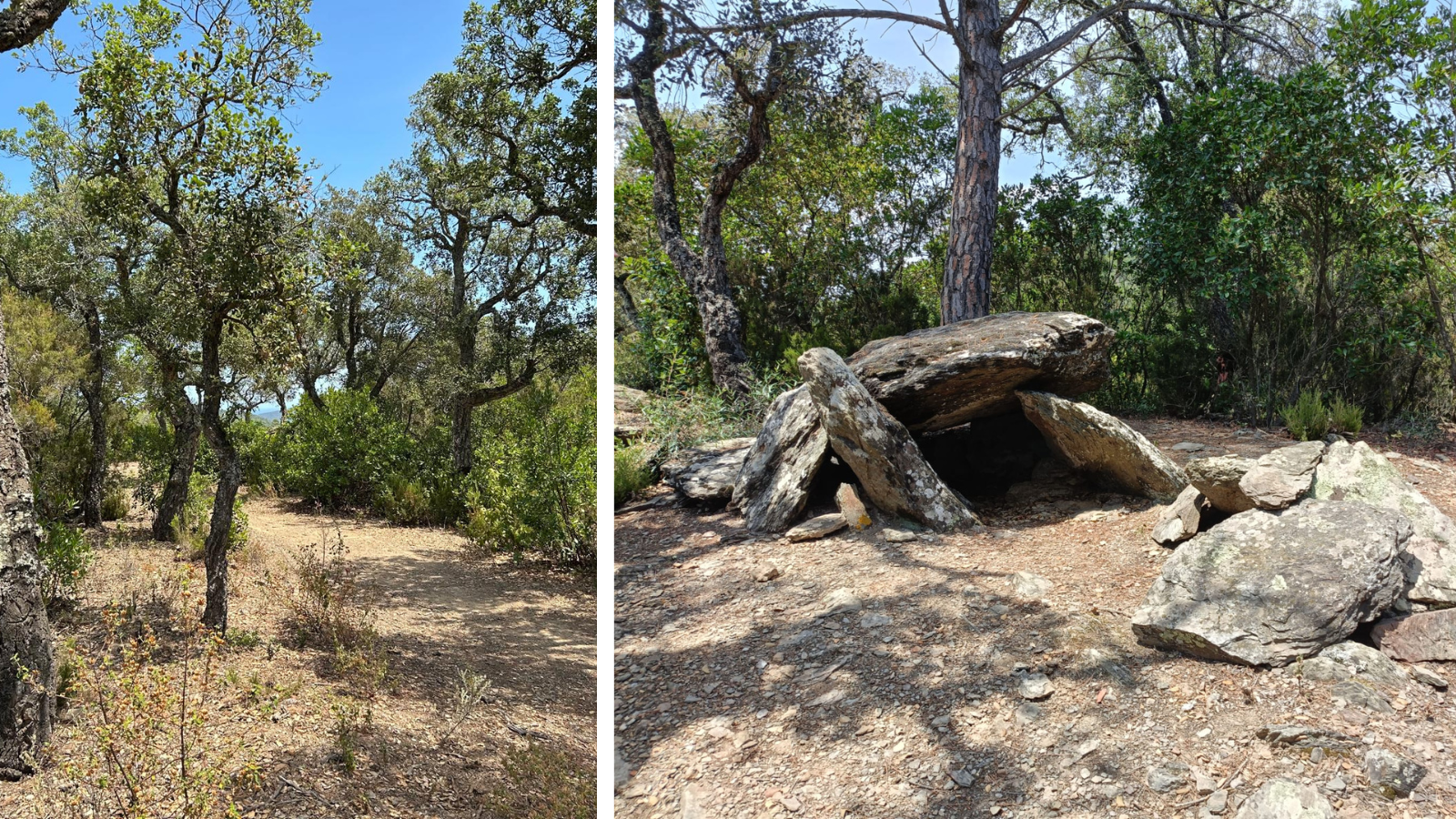
Walking through the cork oak forest, witnessing the cork harvest, talking about the forest and sharing an outdoor lunch. A day that revealed there is far more behind every cork stopper than simply a natural raw material.
A Morning in the Cork Oak Forest
Cork harvesting takes place during only a few weeks each year. It is a quiet, highly skilled craft that depends on an intimate understanding of the tree.
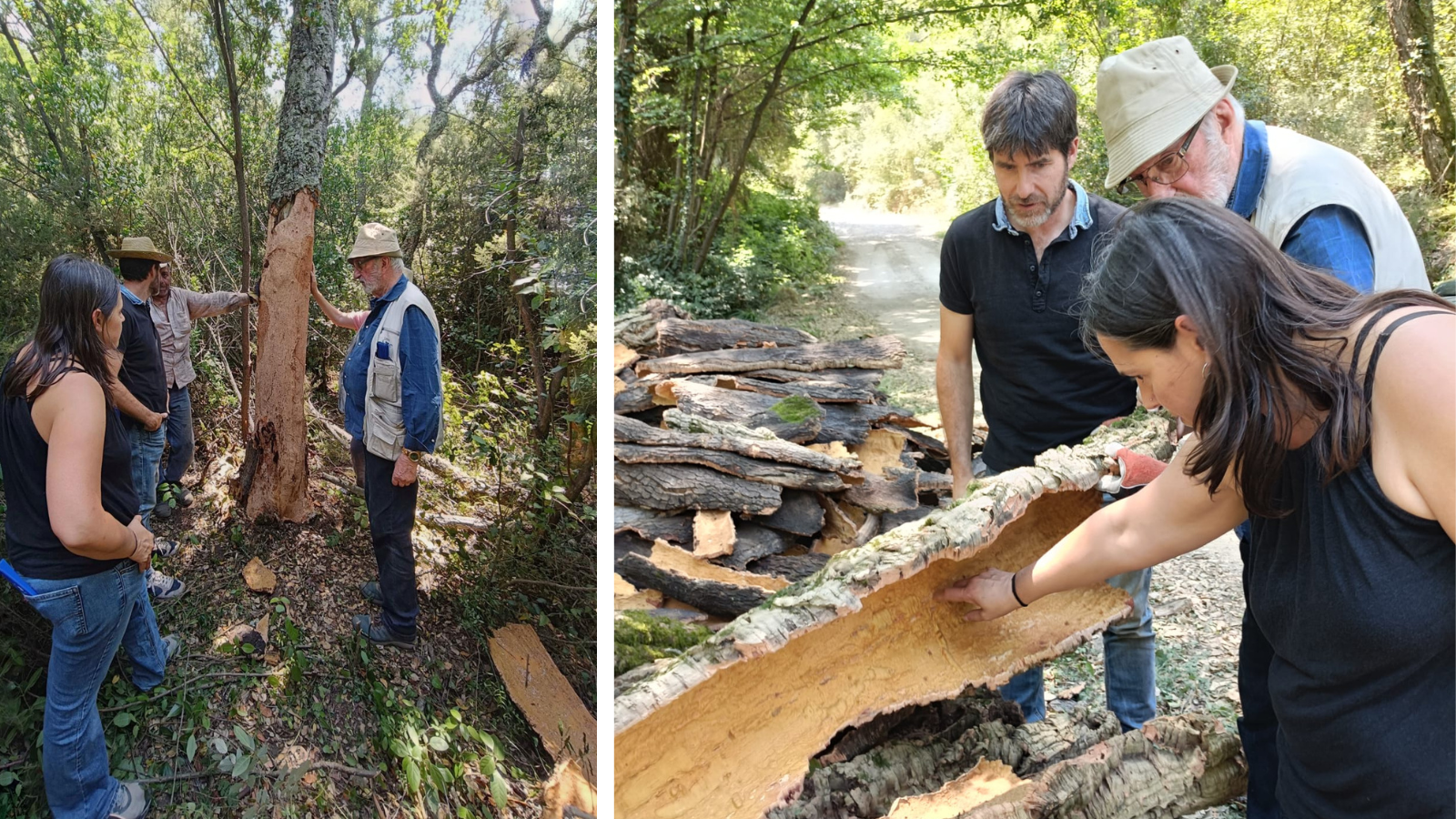
Our guests had the opportunity to observe the work of the cork harvesters up close, watching the bark being carefully removed with an axe and seeing how every movement reflects years of experience. The bark must be extracted without harming the cork oak, allowing it to continue growing until the next harvest, nine or ten years later.
It is one of those professions that is remarkable precisely because of its apparent simplicity. Seeing it firsthand makes it clear that nothing is improvised: every gesture is guided by skill, respect and a deep connection with the forest.
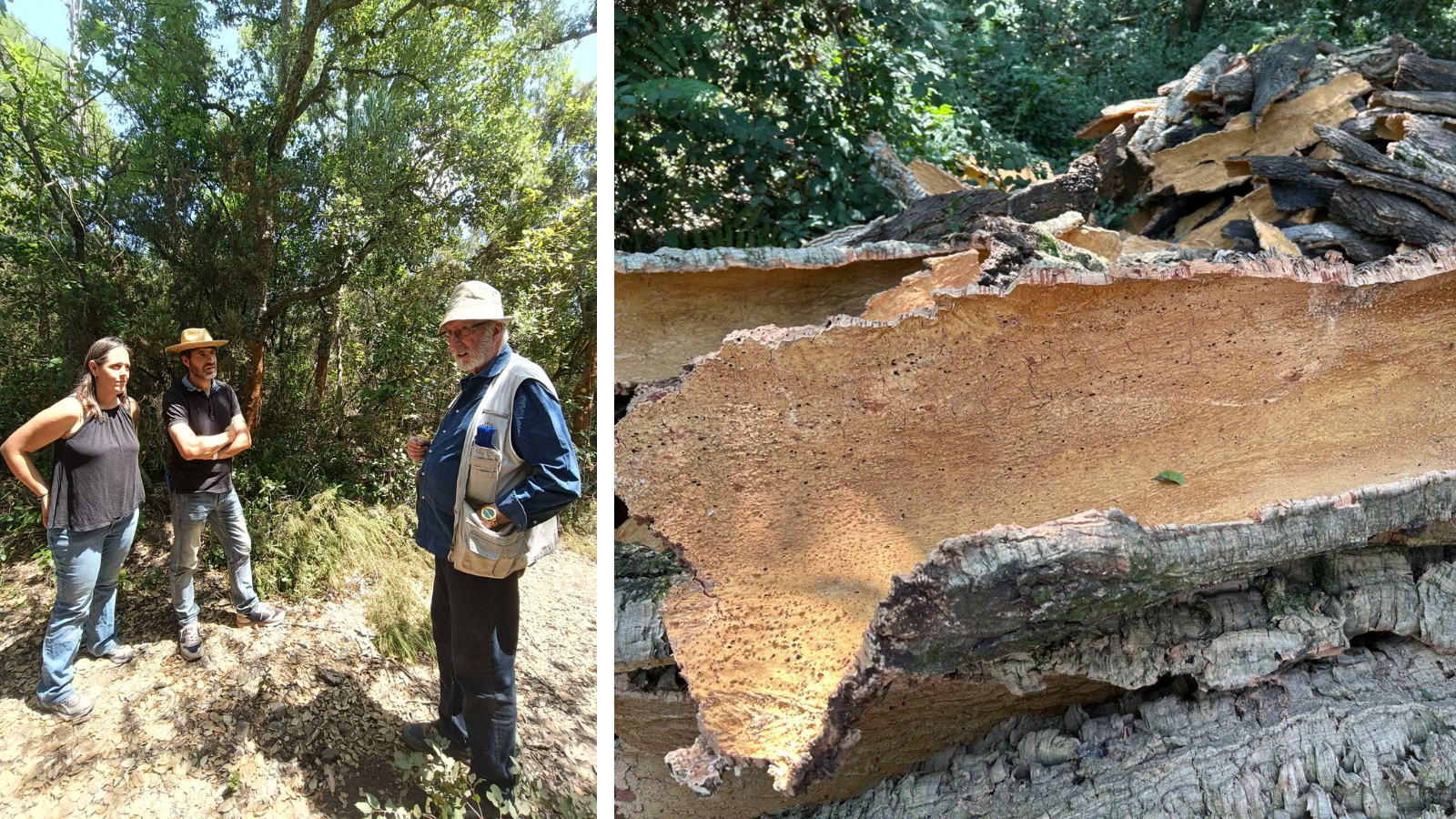
Understanding Cork Begins with Understanding the Forest
Those who work in the wine world know the qualities of natural cork well. Yet walking through a cork oak forest offers a completely different perspective.
Cork is no longer seen as a finished product but as the result of a process that begins decades earlier. Every tree follows its own rhythm, every harvest depends on the condition of the forest, and every stripping season is made possible by people whose knowledge of this landscape has been passed down through generations.
This is one of the ideas we most enjoy sharing with visitors: the value of cork does not begin in the factory. It begins much earlier, within a living ecosystem that requires time, careful management and constant care.
Cork oak forests are far more than a source of raw material. They support remarkable biodiversity, help sustain rural communities and represent a way of managing the land that successfully combines economic activity with landscape conservation.
The Connection Between Forest and Wine
There is something particularly revealing about seeing wine professionals walk through a cork oak forest.
Suddenly, the closure is no longer just a technical component; it becomes the final expression of a landscape. Wine and cork share the same philosophy: both require time, patience and respect for the rhythms of nature.
Every decision made in the vineyard or in the forest ultimately serves the same purpose: preserving the identity of a place and carrying it all the way to the bottle. These are conversations that simply could not have the same meaning within the walls of a meeting room.
A Different Perspective
A few days later, part of Les Gavarres was transformed by wildfire. Fortunately, Finca Fitor was only lightly affected, although four hectares of the estate were impacted by the fire.
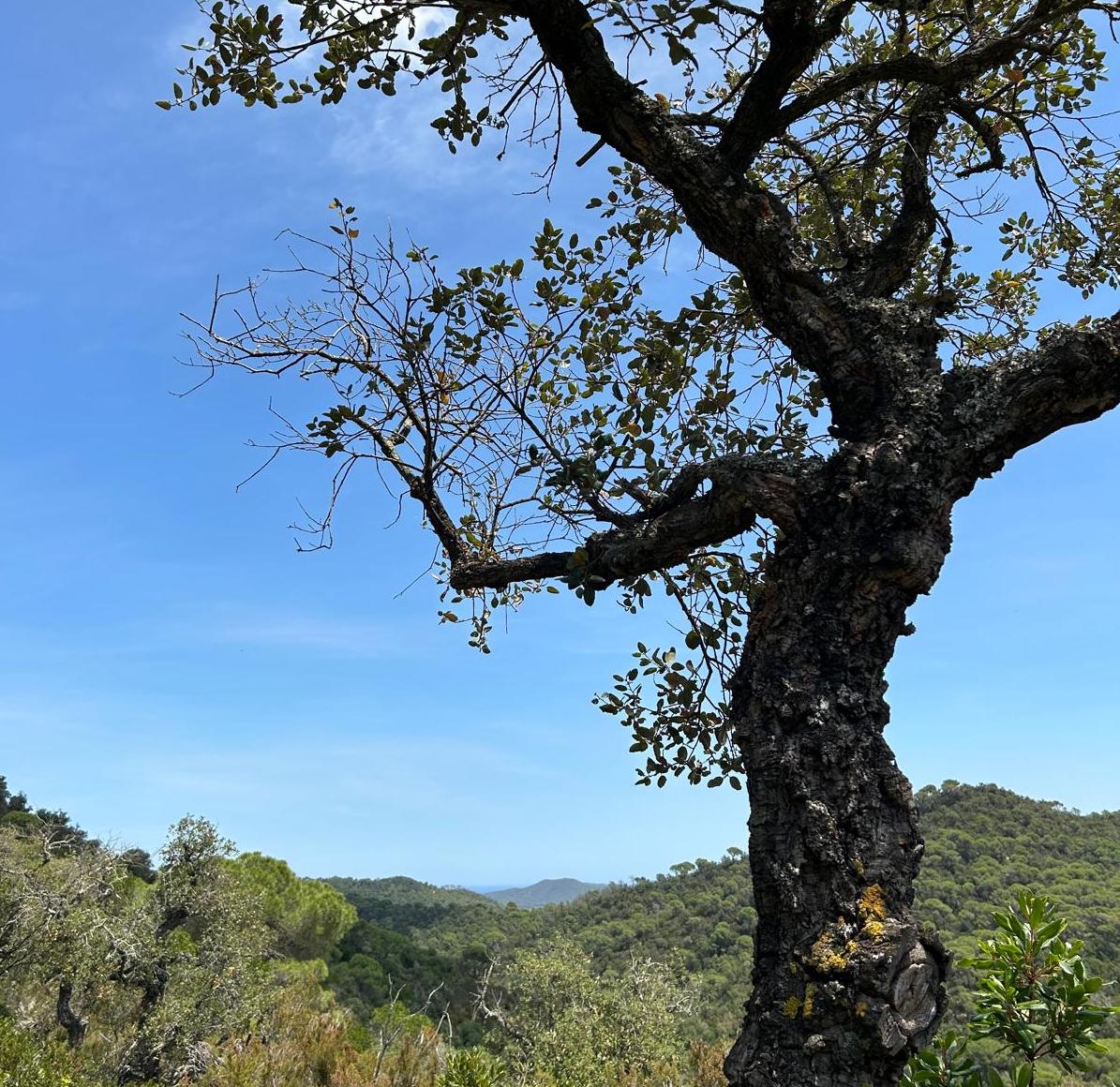
The images from that day do not show the wildfire. They show a living forest, the work of the cork harvesters and a landscape that continues to demonstrate how nature and human activity can coexist.
Perhaps that is why they carry an even deeper meaning today. They remind us that these landscapes are part of our Mediterranean heritage, and that getting to know them is also a way of helping to protect them.
At J·Vigas, we believe that opening the doors of the forest helps people better understand cork. And understanding cork ultimately means understanding everything that lies behind a bottle of wine. Because every cork stopper begins its journey long before it reaches a winery. It begins here, among cork oak forests, the people who care for them and a landscape that deserves to remain part of our future.
The forest holds memories, but it also has the ability to regenerate.